

If you’re an SME eyeing the Gulf region, you already know the opportunity is massive. The GCC economies — Saudi Arabia, UAE, Qatar, Kuwait, Bahrain, and Oman — are actively diversifying. They’re welcoming foreign businesses. And they’re sitting on enormous pools of capital looking for the right partners. But here’s the real challenge: knowing how to connect with the right investors, at the right time, with the right message. This is precisely what investor outreach is meant to address. This guide takes you through all the steps – how to be investment-ready, and how to establish long-term investor relationships in the Gulf.
What Is Investor Outreach & Why Is It Important to Gulf Expansion
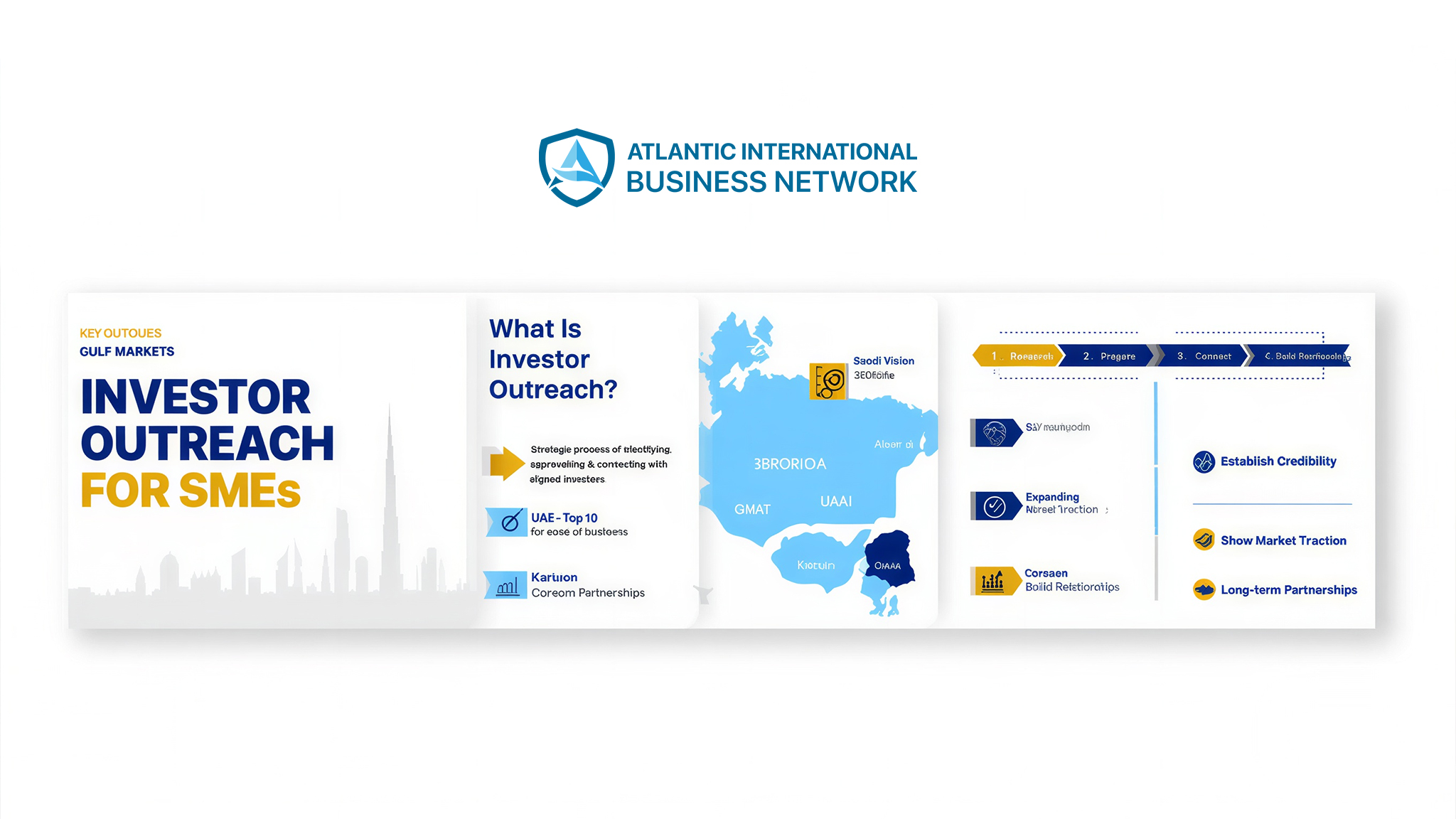
It is the organized procedure of recognizing, approaching and connecting with investors who fit your business. This process is not spamming a list of names. Rather, it’s a research-based, strategic initiative that puts your SME in the spotlight of decision-makers who can actually drive change.
In the case of SMEs, investor outreach of SMEs does not merely entail raising money. It implies establishing credibility, showing market traction, and establishing relationships that will persist beyond the initial funding round.
Why Gulf Markets Attract Global & Regional Investors

The Gulf region is one of the world’s most active investment destinations right now. According to the IFC’s emerging markets outlook, Gulf-based investment into SMEs grew significantly between 2023 and 2025, driven by regional diversification mandates.
Here’s why it’s important:
- Saudi Vision 2030 is pumping billions into non-oil sectors.
- The UAE ranked among the top 10 globally for ease of doing business.
- Qatar, Bahrain, and Kuwait are expanding free zones and startup ecosystems.
- Gulf market investors are actively seeking cross-border partnerships with proven SMEs.
Common Funding Challenges SMEs Face in GCC
| Challenge | Why It Happens |
| Lack of local credibility | No established Gulf presence or references |
| Misaligned investor expectations | Wrong stage, sector, or structure |
| Weak financial documentation | Investors can’t assess risk properly |
| No warm introductions | Cold outreach rarely works in relationship-driven Gulf markets |
Solving these challenges starts with proper preparation. Explore our investment & funding advisory and market entry & expansion strategy at AIBN to understand how structured support can change your results.
Preparing Your Business for Investor Relations
Investment Readiness & Financial Preparation
Before you talk to someone, think about whether or not you would put capital into your own firm right now. When you’re ready to invest, your finances are in order, your story is clear, and your numbers stand up to scrutiny.
Key preparation steps include:
Audited financial statements (at least 2–3 years).
- Clear financial projections for 3–5 years.
- A defined valuation strategy backed by comparable market data.
- A complete pitch deck presentation that tells a compelling story.
Structuring Your Equity Financing Strategy
Your equity financing structure affects everything — from who you can approach to how much control you retain. Work with advisors on capital raising & structuring to get this right from the start. Think carefully about:
- How much equity are you willing to offer?
- Whether you need growth-stage funding or seed capital.
- What capital structuring model fits your business? (convertible notes, SAFE agreements, straight equity)
Aligning Business Goals with Investor Expectations
Investors don’t just want a piece of your profits. They’re buying into your plan, your team, and your ability to carry it out. Deals die quickly when things aren’t in line here. Review your numbers and readiness with financial due diligence support before any investor conversation.
Make sure you clearly communicate:
- Your exit strategy or growth horizon.
- How investor capital accelerates specific milestones.
- Your governance frameworks and reporting structure.
Identifying the Right Funding Opportunities in Gulf Markets
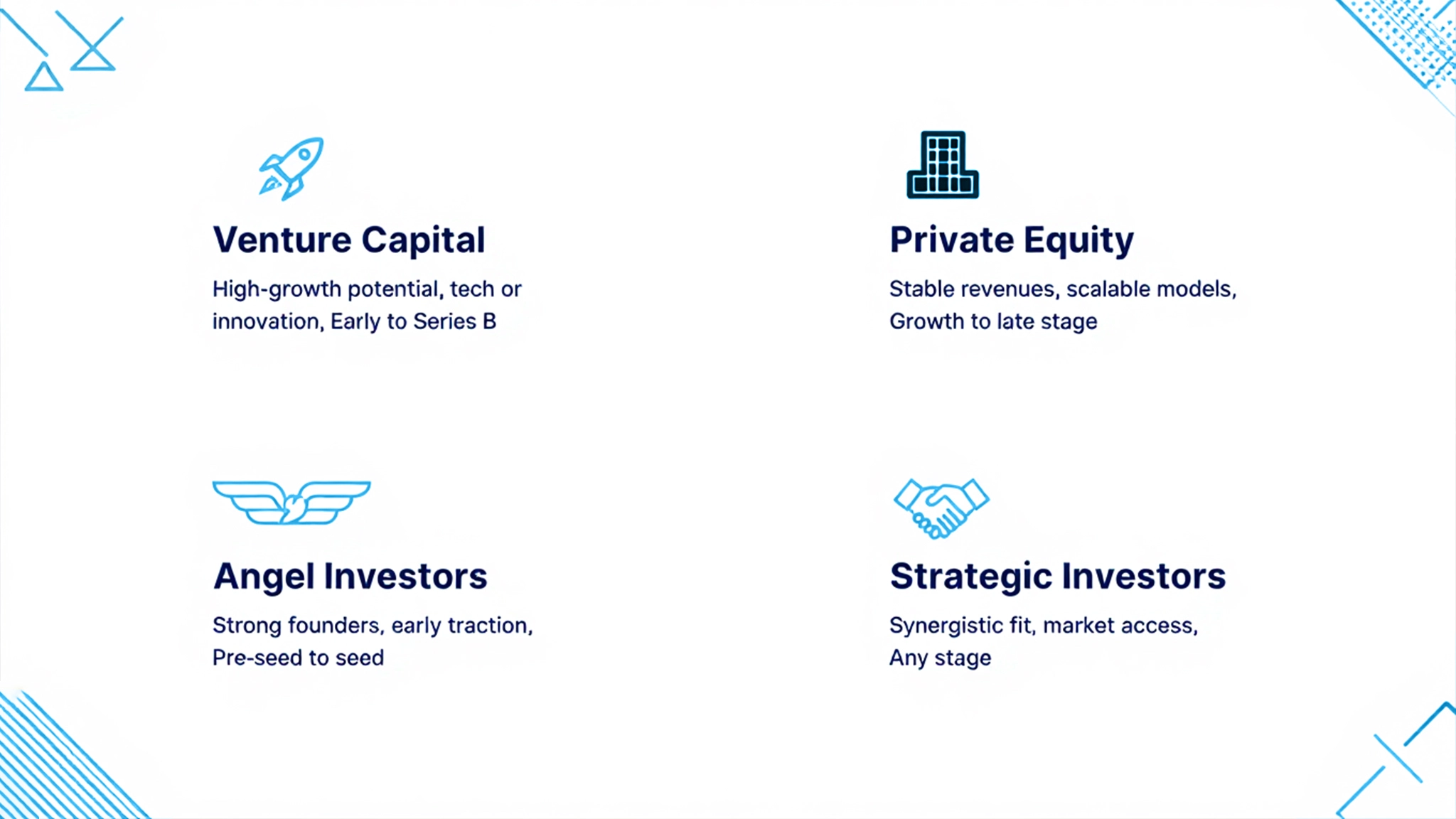
Types of Investors in GCC (VCs, PE, Strategic Investors)
| Investor Type | What They Look For | Typical Stage |
| Venture capital firms | High-growth potential, tech or innovation | Early to Series B |
| Private equity investors | Stable revenues, scalable models | Growth to late stage |
| Angel investors | Strong founders, early traction | Pre-seed to seed |
| Strategic investors GCC | Synergistic fit, market access | Any stage |
Matching Funding Stages with Investor Profiles
When you match your stage to the correct investor profile, SME funding in the GCC works best. When your pitch speaks the investor’s language, you can get funding. For example, if you’re trying to recruit strategic capital partners, don’t only talk about financial rewards; talk about how the two markets might work together.
Avoiding Misaligned Investment Partnerships
A bad investor relationship is worse than no funding at all. Use our investor matching & relations and explore our valued network at AIBN to access pre-vetted Gulf investors.
Before accepting any term sheet, evaluate:
- Do their portfolio companies conflict with yours?
- Do their timelines match your growth plan?
- Are they adding value beyond capital?
Step-by-Step Investor Outreach Process
Step 1 — Building a Targeted Investor List
- Use Crunchbase, LinkedIn, and regional databases to map the Gulf investor landscape.
- Filter by sector, stage, and geography.
- Prioritize investors with existing Gulf portfolio companies.
Step 2 — Outreach Messaging and Pitch Communication
- Short message (under 150 words).
- Specific to their portfolio or investment thesis.
- Clear about what you’re asking for (a 20-minute call, not an immediate investment).
Your investor engagement strategy should lead with value, not desperation.
Step 3 — Follow-Ups, Meetings, and Relationship Building
- Follow up every 5–7 business days.
- Add value each time (a new metric, press mention, or insight).
- Move conversations from email → call → in-person meeting.
Our events accelerate this process enormously. Explore our B2B matchmaking & networking and global platform curation for curated investor access.
Managing Investor Relations During & After Fundraising

Communication Best Practices with Investors
- Once you’re in conversations, shareholder relations becomes your full-time job alongside running the business. Keep investors updated. Be proactive, not reactive.
- Send monthly or quarterly updates even before closing.
- Share wins and challenges — investor confidence grows with honesty.
- Use structured templates for reporting.
Transparency, Reporting, & Governance
Gulf investors — especially institutional ones — take governance frameworks seriously. Our policy & regulatory navigation and legal & compliance frameworks help you stay compliant across GCC jurisdictions.
Establish:
- A clear board or advisory structure.
- Regular financial reporting timelines.
- A defined due diligence process for future rounds.
Building Long-Term Investor Trust
Post-investment support doesn’t end at signing. The best shareholder relationships evolve into board partnerships, introductions, and follow-on funding. Deliver on milestones. Communicate clearly. Treat investors as long-term allies.
Strategic Partnerships, Joint Ventures, & Capital Synergies
When Investors Become Strategic Partners
Sometimes the best capital comes bundled with market access, distribution networks, and local credibility. Strategic investors GCC often bring more than money — they bring doors that would otherwise take years to open.
Joint Ventures as a Growth Catalyst
In the Gulf, joint ventures are a strong way to invest across borders. Local partners know the rules, speak the language, and have ties with customers. You bring the knowledge about the product, technology, or operations. This combination often works better than entering the market on its own. You can learn more through our joint venture facilitation and partnership & alliance building.
Combining Capital with Market Access
The smartest capital raising strategy in GCC isn’t just about valuation. It’s about finding investors who accelerate your go-to-market. When capital and market access combine, SME expansion funding multiplies in impact.
Why AIBN Is the Right Partner for Investor Outreach in GCC
Regional Investor Access & Market Credibility
AIBN works at the crossroads of business advising and networks for regional investors. The team gives you direct access to Gulf-based private equity investors, venture capital firms, family offices, and others who have already been screened and are a good fit for your industry.
End-to-End Support from Outreach to Deal Closure
From pitch deck preparation to term sheets, shareholder agreements, and investment committees — AIBN supports the full funding lifecycle. This is investor outreach consulting done right: structured, transparent, and results-focused.
Ethical, Transparent, and Strategic Advisory
International investor outreach demands integrity. AIBN’s approach is built on ethical advisory, clear communication, and long-term partnership thinking. Learn more about who we are at AIBN, our distinct approach, and partner with us.
Conclusion
Entering Gulf markets is a bold move. But investor outreach is the bridge between ambition and execution. Without it, the best business in the world stays invisible to the people who could fund its growth. Ready to take your first step? Connect with AIBN’s funding advisory team today and explore our investment & funding solutions to begin your Gulf market journey.
FAQs
What is investor outreach, and how does it work for SMEs?
It is the strategic process of identifying, contacting, and engaging investors who align with your business goals. For SMEs, it involves preparing financial documents, crafting targeted messaging, and building relationships through structured follow-ups.
What types of investors are active in GCC markets?
Venture capital firms, private financial sponsors, angel investors, family offices, sovereign wealth funds, and strategic investors are all types of investors that can be found in Gulf markets. Each kind has varied stage preferences, sector interests, and return expectations.
How long does the investor engagement process typically take?
The funding lifecycle from first outreach to deal closure typically takes 3–9 months for SMEs entering Gulf markets. Institutional investors such as PE funds often require longer due diligence processes, multiple meetings, and committee approvals.
What should my pitch deck include for Gulf investors?
Pitch deck preparation for Gulf investors should cover your executive summary, problem and solution, market size, business model, traction metrics, financial projections, team profiles, valuation strategy, and funding task.
How does equity financing differ from debt financing for Gulf market entry?
It means you exchange a stake in your company for capital, without repayment obligations. Debt financing requires repayment with interest. In Gulf markets, equity is often preferred for early-stage SMEs because it aligns investor incentives with business growth. However, capital structuring experts can help you combine both to minimize dilution while meeting your SME expansion funding needs.