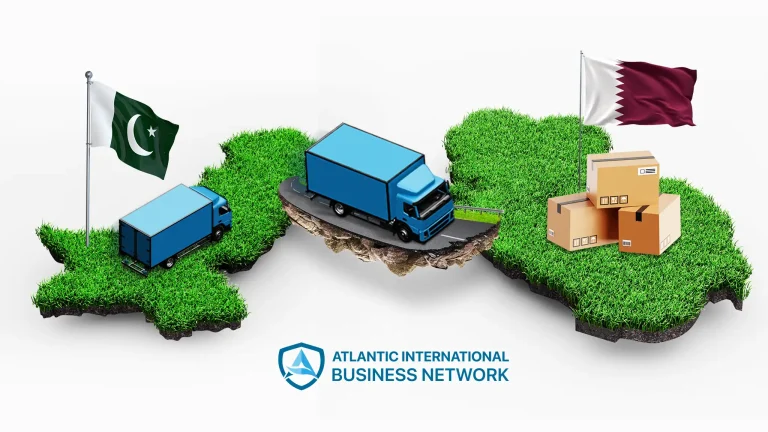



Pakistani startups are no longer thinking small. More founders are asking the same question today: “Why stay limited when the world is open?” And honestly, that’s the right question. Global expansion is no longer just for big corporations. Startups with the right product and the right plan are entering Gulf markets — and winning. Qatar and the GCC region offer something rare: a stable economy, low taxes, and genuine demand for innovative solutions. This guide covers everything you need. From understanding why Gulf markets matter to building your step-by-step entry plan — it’s all here. Whether you’re a tech startup, a services company, or an e-commerce brand, this is your practical roadmap to international business growth in 2026.
Understanding Global Expansion: Why Pakistani Startups Should Go International

The Case for Going Beyond Pakistan’s Domestic Market
Pakistan’s domestic market is growing — but it has limits. Consumer spending power is still developing. Competition is rising fast. Margins are getting squeezed. Here’s the truth: business expansion into international markets gives you access to higher-paying customers, stronger currencies, and industries that actually fund innovation.
Pakistani startups that move early into Gulf markets gain a first-mover advantage. They build brand credibility faster. They attract better investors. And they grow revenue in dollars or riyals — not rupees.
Why Qatar and GCC Are the Right Destinations
Qatar ranks among the world’s highest GDP-per-capita nations. The UAE hosts over 40 free zones. Saudi Arabia is spending hundreds of billions on Vision 2030 projects. These aren’t future promises — they’re current realities. For Pakistani founders, market entry services into this region make practical sense. The time zone difference is minimal. Cultural overlap exists. And Pakistan-GCC trade relationships are well-established.
Qatar as Your Global Expansion Gateway

Qatar’s Economy in 2026
Qatar’s economy is diversifying fast. Beyond oil and gas, the government is actively investing in technology, healthcare, logistics, and financial services. Qatar National Vision 2030 is the blueprint — and it’s creating real opportunities for foreign startups.
Key sectors driving demand right now are as follows:
- Fintech and digital payments
- EdTech and workforce training
- Healthcare technology
- Logistics and supply chain
- Smart city infrastructure
Why Pakistani Startups Prefer Qatar for Market Entry
Cultural familiarity matters more than most founders admit. Qatar has a significant South Asian population. Pakistani professional culture is in line with business norms. Arabic is not necessarily necessary, English is fluent in most business environments.
In addition, there exist good bilateral trade relations between Pakistan and Qatar. This renders feasibility studies of Qatar market entry to Pakistani businesses easier than entering, say European markets.
| Factor | Qatar Advantage |
| Corporate Tax | 0% for most sectors |
| Language | English widely accepted |
| South Asian Community | Large and established |
| Business Setup Time | 3–7 working days (free zones) |
| Pakistan-Qatar Relations | Strong bilateral ties |
Exploring GCC Countries for Business Expansion
UAE: The Regional Business Hub
Dubai needs no introduction. It’s where global startups land first. Free zones like DMCC, Dubai Internet City, and DIFC offer 100% foreign ownership, zero corporate tax, and world-class infrastructure. Abu Dhabi is growing too — especially in fintech, AI, and clean energy. Run a competitive analysis before choosing your emirate. Each has a different audience.
Saudi Arabia: Vision 2030 & Beyond
Saudi Arabia is transforming at a remarkable pace. NEOM, Red Sea Project, and Diriyah Gate are just three of the mega-projects creating demand for technology, services, and B2B solutions. The market is massive — over 35 million people, a young population, and rising digital adoption. GCC global expansion guide strategies must include Saudi Arabia as a priority market, not an afterthought.
Kuwait, Bahrain, & Oman: Niche but Valuable
Don’t overlook the smaller Gulf markets. Bahrain has the most open fintech regulatory environment in the GCC. Kuwait has strong purchasing power. Oman is investing heavily in tourism and logistics. For startups testing cross-border expansion before going big, these three offer lower competition and faster relationship-building.
Strategic Planning for Your Global Expansion Journey

Market Research First — Always
You wouldn’t drive somewhere new without checking the map. The same logic applies here. Good market entry planning starts with research. Use strategic positioning frameworks to identify where your startup fits in the competitive landscape.
Key research areas:
- Market size and addressable demand
- Competitor landscape (local and regional)
- Regulatory requirements
- Customer behavior and preferences
- Pricing benchmarks
Choosing Your Entry Mode
There’s no single right answer here. Your entry mode depends on your budget, timeline, and risk appetite.
| Entry Mode | Best For | Risk Level |
| Branch Office | Established companies | Medium |
| Subsidiary | Long-term commitment | Medium-High |
| Local Partnership | First-time entrants | Lower |
| Free Zone Entity | Tech/service startups | Low |
| Joint Venture | Capital-intensive sectors | Medium |
Financial Planning for International Growth
Global expansion strategies for startups often fail not because of bad ideas, but because of poor financial planning. Estimate your capital needs honestly. Build a 12-month runway before launch. Explore investment advisory options early. Revenue projections should be conservative in year one. Gulf markets reward patience and relationship-building over aggressive short-term tactics.
Legal & Regulatory Framework for Market Entry
Business Setup Requirements
Every GCC country has its own rules. Some require local sponsors. Others allow full foreign ownership in free zones. Understanding this before you sign anything is critical. Work with proper legal compliance advisors who understand both Pakistani and GCC regulations. Mistakes here cost time, investment, and sometimes your license.
Trade Policies & Bilateral Agreements
Pakistan and GCC countries have growing trade frameworks. Import/export regulations are becoming more startup-friendly. Understanding trade policy advisory services can save months of back-and-forth with customs authorities. International business expansion Pakistan into GCC is also supported by preferential bilateral agreements — use them.
Strategic Partnerships for Successful Business Expansion
The right local partner changes everything. They give you access to opportunities that would normally take years to reach on your own. They understand the local culture and have direct connections with key decision-makers. Build strategic alliance formation partnerships carefully. Don’t rush. Do your due diligence. A bad partner is worse than no partner.
For capital-intensive sectors, joint venture facilitation structures work well. They share risk while combining local market knowledge with your startup’s innovation. For product-based businesses, strong distribution agreements ensure your goods reach customers through trusted local networks.
Cultural Intelligence for Business Expansion Success
GCC Business Culture: What You Must Know
Gulf business culture is relationship-first. Decisions take longer. Trust is built face-to-face. Rushing a deal signals disrespect. Cultural adaptation strategies aren’t optional — they’re survival tools. Building cultural competency into your team before arrival will make everything smoother. Invest in training programs for your team before deployment. It’s a small cost with a massive return.
Key cultural tips:
- Always greet with respect and patience
- Meetings often start late — don’t show frustration
- Ramadan schedules shift business hours significantly
- Business cards matter — treat them with care
- Decisions rarely happen in the first meeting
Funding Your Global Expansion
Capital Raising Options
Pakistani startups global expansion opportunities often stall at funding. But options exist. Gulf-based VCs are actively looking for innovative startups with regional growth potential.
Consider these capital raising routes:
- Angel investors in the UAE and Qatar
- Government grants from QDB (Qatar Development Bank)
- Accelerator programs in Saudi Arabia and the UAE
- Diaspora investors — Pakistani professionals in GCC are a powerful network
Attracting International Investors
Your pitch deck needs to speak Gulf. Emphasize market size, scalability, and regional relevance. Use investor matching services to connect with the right funding sources faster.
Risk Management in Global Expansion
Common Challenges & How to Handle Them
International market penetration isn’t always smooth. Regulatory changes, cultural misalignment, and operational complexity are real risks.
Mitigate them with:
- Solid regulatory risk mitigation planning
- Local legal counsel from day one
- Conservative financial projections
- Flexible business models that adapt quickly
Step-by-Step Global Expansion Action Plan
Starting with Research & Planning (Months 1–3)
- During the first three months, your team should conduct market research and feasibility analysis.
- A global expansion plan can then be developed based on the insights gathered.
- At the same time, it’s important to assemble your core team and set a realistic budget.
Legal Setup (Months 4–6)
- Company registration in the target country is the first step in this phase.
- Once that’s done, local partners need to be identified and thoroughly vetted.
- Completing all licensing and compliance requirements ensures a smooth start.
Launching Operations (Months 7–9)
- An office or virtual presence provides a base for operations.
- Following this, the team should begin customer outreach activities.
- B2B matchmaking can help secure early clients and partnerships.
Scaling and Growth (Months 10–12+)
- Feedback from initial operations should guide optimization of processes.
- Expanding into additional GCC markets allows the business to reach new customers.
- Finally, efforts should focus on scaling revenue and moving toward profitability.
How AIBN Supports Your Global Expansion Journey
AIBN specializes in helping Pakistani and South Asian startups enter Gulf markets successfully. From market entry solutions to partnership solutions, AIBN provides end-to-end support.
Their services include:
- Feasibility studies and competitive analysis
- Legal and regulatory navigation
- Investor matching and capital raising
- Cultural training and team preparation
- Ongoing strategic advisory
Ready to start? Contact AIBN today and take your first real step toward global expansion.
Conclusion
The GCC is open. Qatar is growing. And Pakistani startups have a genuine edge — cultural familiarity, technical talent, and competitive pricing. But opportunity doesn’t wait forever. Global expansion requires planning, the right partners, and a willingness to adapt. Start with research. Build smart partnerships. Execute with patience. The Gulf rewards those who come prepared. Your international business future starts with one decision: to begin. Take that step today.
FAQs
How much capital do I need to start a business in Qatar?
Minimum capital requirement depends on the type and structure of the business. But you must reasonably estimate the cost of operations, licensing, office space and at least 6-12 months of working capital before you get your first revenue.
Can Pakistani startups own 100% of their company in GCC countries?
Yes, in many cases. Free zones in the UAE have 100% foreign ownership. Recent regulatory reforms have also increased foreign ownership rights in several sectors in Qatar. Nevertheless, the establishment of business in the mainland of certain GCC countries might still need a local partner or sponsor, based on the industry.
How long does company registration take in Qatar or the UAE?
The registration of a free zone company normally requires 3-7 working days in the UAE. In Qatar, it normally takes 2-4 weeks based on the business activity and the completeness of the documentation. The process is accelerated when one works with a local business setup advisor.
What industries are best suited for Pakistani startups entering GCC markets?
Fintech, EdTech, healthtech, IT services, logistics technology, and digital marketing are among the strongest sectors. Pakistani startups in these industries align well with GCC Vision 2030 priorities and existing market gaps, giving them a real competitive advantage over many Western competitors.
Do I need to speak Arabic to run a business in Qatar or the UAE?
Not necessarily. The English language is common in the business world in the GCC, particularly in free zones and large business centres such as Dubai and Doha. With that said, it is possible to learn simple phrases in Arabic as it is a sign of cultural respect and can be used to establish better relationships with local partners and clients.
Are there any tax advantages for Pakistani startups in GCC?
Absolutely. Most GCC countries offer zero or very low corporate tax rates for free zone entities. Onshore companies are subject to 10% corporate tax in Qatar, although free zone businesses are usually exempt. In 2023, the UAE implemented a 9% corporate tax, although most small businesses and free zone companies are still exempted according to the existing thresholds.
What is the biggest mistake Pakistani startups make when entering GCC markets?
Rushing the process without proper research and local relationships is the biggest mistake. Many startups underestimate how relationship-driven the Gulf business culture is. Signing agreements without thorough due diligence or trying to copy a Pakistan-focused business model directly into a Gulf market — without localization — are the two most common and costly mistakes.
How can AIBN help my startup with GCC market entry?
AIBN offers complete support in the form of initial feasibility studies and market research to legal establishment, identification of partners, matching of investors, and ongoing strategic guidance. They are specialists in helping Pakistani and South Asian startups to overcome GCC regulations, cultural peculiarities, and business development, so that your growth will be faster, safer, and more economical.