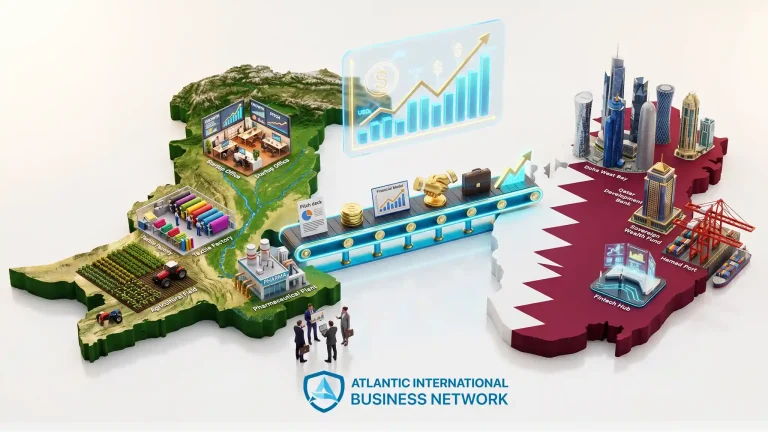



Qatar is no longer just a name on the energy map. It’s quickly becoming one of the most exciting business destinations in the entire Gulf region. With its ambitious Qatar National Vision 2030, a rapidly diversifying economy, and a growing appetite for foreign investment, Qatar is signalling loud and clear — the door is open. So if you’re a Pakistani entrepreneur or a foreign investor thinking about your next move, this is your year for the best investment opportunities in Qatar 2026. Let’s walk through the Qatar business opportunities that matter most right now.
Why Qatar Is Open for Business in 2026
Qatar’s Economy Beyond Oil & Gas
Most people still associate Qatar exclusively with oil and gas. That image is changing fast. The IMF has projected 6.1% real GDP growth for Qatar in 2026, with non-hydrocarbon sectors — including logistics, manufacturing, and tourism — expected to maintain solid momentum. This is a real structural shift, not just optimistic language in a government brochure. The non-hydrocarbon economy is steadily rising, and that’s exactly where the most accessible Qatar business opportunities for foreigners lie.
100% Foreign Ownership — What It Means
Here’s the part that surprises most first-time investors. Since Law No. 1 of 2019, Qatar has opened the majority of its commercial sectors to 100% foreign equity, removing the old requirement for a 51% Qatari partner that had long frustrated international entrepreneurs.
Companies established under the QFC, QSTP, QFZ, and Msheireb City regimes can be 100% owned by a foreign investor and benefit from incentives, including no tax, duty-free imports, and unrestricted repatriation of capital and profits. For Qatar business setup for foreign investors, this is a game-changer. You can now own your business outright, keep your profits, and operate with real independence — something that simply wasn’t possible a decade ago.
|
Business Structure |
Foreign Ownership |
Key Benefit |
|
Mainland LLC (MOCI) |
Up to 100% (eligible sectors) |
Full onshore market access |
|
Qatar Financial Centre (QFC) |
100% |
Common law framework, fintech-friendly |
|
Qatar Free Zone (QFZA) |
100% |
Tax holidays up to 20 years, zero customs duty |
|
QSTP |
100% |
R&D focus, Education City access |
Why Pakistani Entrepreneurs Fit Qatar
Pakistan and Qatar share more than just geography — they share language roots, Islamic values, a deep halal economy Qatar, and decades of labor migration history. That cultural alignment gives Pakistani entrepreneurs a natural advantage when entering this market.
The two governments have committed to enhanced cooperation across education, health, trade, and technical sectors, while also discussing new MoUs on land transport and port cooperation. For Pakistani SMEs entering Qatar, this political and bilateral momentum translates directly into business access, procurement networks, and institutional trust.
Top Qatar Business Opportunities by Sector

Logistics & Supply Chain Services
Qatar sits at the heart of the Gulf. It connects Asia, Africa, and Europe — and it knows it. Qatar’s Ras Bufontas and Umm Alhoul free zones are focused squarely on logistics, manufacturing, aviation, and e-commerce. The demand for reliable logistics and supply chain Qatar partners is growing as Qatar diversifies its imports and strengthens its regional trade role. For Pakistani logistics companies or freight operators, this is a high-potential entry point. Look into supply chain solutions that connect your operations across the GCC.
Halal Food & Export Opportunities
The global halal food market is enormous — and Qatar is a hungry buyer. Qatar’s food import dependence creates investment opportunities in Pakistan’s agri-food and livestock sectors. Pakistan has already affirmed its readiness to serve as a reliable supplier of halal meat, fruits, vegetables, rice, and animal feed to Qatar. But raw commodities alone won’t cut it. Exporters must align with Gulf Standard Organization requirements, improve traceability, and ensure proper halal certification in accordance with Qatari regulations.
Qatar halal food business opportunities for Pakistanis are genuinely exciting — especially if you invest in branding, cold chain infrastructure, and Arabic-compliant packaging. Explore halal food export to GCC requirements before you begin.
Tech, Fintech & Digital Startups
Qatar is betting big on technology. The Qatar Financial Centre (QFC) has evolved well beyond traditional finance — it now actively supports fintech, professional services, and digital startups. Technology and digital services represent Qatar’s fastest-growing business segment.
Qatar e-commerce growth is accelerating, too. For tech startups Qatar — whether AI-based, SaaS, or e-commerce — the QFC offers a world-class legal framework, English common law contracts, and a flat 10% corporate tax. If you’re a Pakistani developer or tech founder, this is worth serious attention.
Investment Opportunities in Qatar — High-Growth Areas
Healthcare & Pharmaceuticals
Qatar’s healthcare ambitions are substantial. The government is pumping significant capital into medical infrastructure, pharmaceutical supply, and R&D partnerships. Both Pakistan and Qatar agreed to activate a joint working committee under an existing MoU to implement programmes between Qatar’s Hamad Medical Corporation and Pakistani institutions.
For Pakistani pharmaceutical exporters, this opens a direct corridor. Qatar healthcare investment is one of the most structured and government-backed investment opportunities in Qatar right now.
Tourism, Hospitality & Events
Qatar wants 6 million visitors annually by 2030. Post-World Cup, it has the infrastructure to support that goal — world-class hotels, sports venues, and a growing event calendar. The HORECA (hotel, restaurant, catering) sector is on a clear upward trajectory.
This makes Qatar’s tourism and hospitality sector a strong bet for Pakistani entrepreneurs in food service, catering, event management, or cultural tourism. Connect with event management in GCC services to understand the entry process.
Real Estate & Construction
Post-World Cup Qatar still has active construction demand. New residential communities, commercial districts, and mixed-use developments are underway across Doha and Lusail. Foreigners can buy property in designated freehold zones, including The Pearl, West Bay Lagoon, and select districts in Lusail. For construction companies, interior designers, or building materials suppliers from Pakistan, this remains one of the more profitable business ideas in Qatar for expats.
How to Enter the Qatar Market As A Foreigner

Choose the Right Business Structure
Your choice of legal structure shapes everything — taxes, ownership, market access, and cost. For how to start a business in Qatar as a foreigner, here’s a quick overview:
- Mainland LLC — Best for full onshore access and government contracts. Supports 100% foreign ownership in eligible sectors via MOCI.
- QFC Entity — Best for financial services, consulting, and tech. English law 10% corporate tax on local profits.
- Qatar Free Zone (QFZA) — Best for logistics, manufacturing, and e-commerce. Zero corporate tax for up to 20 years.
- Branch Office — Only suitable for executing a specific government contract. Not a long-term commercial base.
Before committing, get a proper feasibility study for Qatar done. It saves you money and painful mistakes.
Avoid Common Qatar Market Entry Mistakes
Many businesses rush into Qatar without doing the groundwork. The most common errors? Choosing the wrong business structure, misreading activity codes, skipping cultural alignment, and picking unreliable local partners. Read up on common Qatar market entry mistakes before you spend a single riyal. This kind of homework helps you understand how to enter Qatar market from Pakistan.
Use Strategic Partnerships to Enter Fast
You don’t have to go it alone. Joint ventures and distribution agreements with established Qatari partners can dramatically shorten your time-to-market. Strategic alliances are especially powerful in regulated sectors like healthcare, food, and professional services. Explore joint ventures vs strategic alliances to understand which model fits your goals. AIBN’s joint venture facilitation services are designed specifically for businesses navigating Gulf markets.
Qatar National Vision 2030 & Business Alignment
Key Sectors Backed by Qatar Vision 2030
Qatar National Vision 2030 is a funded, structured government roadmap. Its four pillars are human development, social development, economic development, and environmental development. The sectors receiving the most government backing include:
- Education and skills development
- Healthcare and pharmaceuticals
- Technology and innovation
- Sustainable infrastructure and green energy
- Tourism and cultural industries
If your business aligns with even one of these pillars, you’re entering a market with government wind behind you. Read the full Qatar National Vision 2030 business guide for sector-specific alignment strategies.
Plan GCC Expansion Beyond Qatar
Think of Qatar as your launchpad, not your final destination. Once you’re established in Doha, the rest of the GCC becomes more accessible. This single-entry advantage is huge for Pakistani exporters. Get your GCC business expansion planning right from the beginning and build a regional strategy, not just a country-level one.
Fund Your Qatar Business Right
Capital is only part of the equation. How you structure your investment, who you bring in as a co-investor, and whether your numbers have been properly stress-tested — these things determine success more than raw funding. Use proper investment and funding advisory services to match your capital needs with the right structure. And if you’re looking for GCC-based investors, investor outreach in Gulf markets can open the right doors.
Build the Right Network in Qatar
B2B Networking for Qatar Business Growth
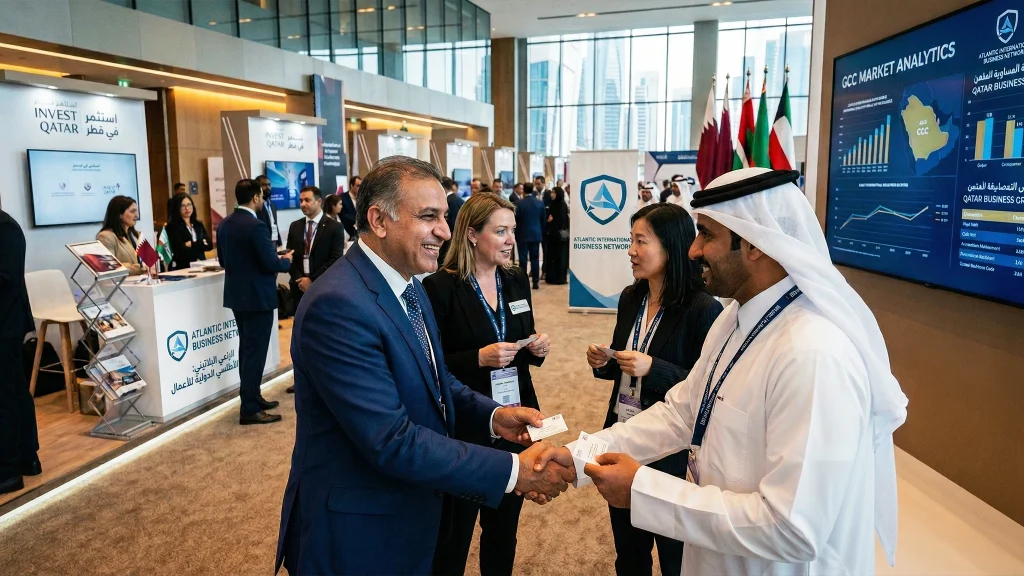
In Qatar, relationships open doors that credentials alone cannot. Local chambers of commerce, industry-specific exhibitions, and formal matchmaking events are all critical entry points. If you don’t have a local network yet, build one deliberately and fast. AIBN specializes in structured B2B networking strategies and B2B matchmaking and networking for businesses entering Gulf markets.
GCC Market Research Before You Invest
Never enter a market on assumptions. Qatar’s consumer base is diverse, spending patterns differ from Pakistan’s, and competition can come from unexpected directions — Indian, Turkish, and European companies are already well-established. Proper market research for GCC entry and competitive analysis gives you the data to make decisions confidently, not hopefully.
Build Your Brand for the Qatar Market
Your brand needs to speak Qatar’s language — literally and culturally. Arabic-friendly marketing materials, trust signals that resonate with Qatari buyers, and a professional corporate identity all matter. A strong corporate branding strategy in GCC positions you as a serious, long-term player, not just another transactional vendor.
Conclusion
Qatar in 2026 presents a genuine, well-structured window for Qatar business opportunities — and the window is wide open right now. From halal food exports and logistics to fintech and healthcare, the sectors for top Qatar business opportunities for Pakistani entrepreneurs 2026 are diverse, the legal framework is increasingly investor-friendly, and the Pakistan-Qatar bilateral trade relationship has never been stronger. Whether you’re a solo entrepreneur or an established SME, the key is to start with solid research, choose the right business structure, and build the right partnerships. Connect with AIBN’s market entry strategy and business network consulting teams to take that first confident step into the Qatari market today.
FAQs
Can a Pakistani entrepreneur start a business in Qatar without a local sponsor?
Yes, and this is one of the biggest recent changes in Qatar’s investment landscape. Under Law No. 1 of 2019, most commercial and service sectors now allow 100% foreign ownership in Qatar without requiring a Qatari partner. For added flexibility, the QFC and QFZA free zones offer full foreign ownership with strong tax benefits and streamlined setup. You don’t need a local sponsor to own, operate, or repatriate profits from your business in Qatar today.
What are the most profitable business ideas in Qatar for expats in 2026?
Several sectors stand out. Halal food supply and export, logistics and warehousing, tech and fintech startups via QFC, healthcare services, and event management are all high-growth areas in 2026. Profitable business opportunities in Qatar for expats tend to be those aligned with Qatar National Vision 2030 pillars — technology, sustainability, healthcare, and education. Any business that serves Qatar’s growing expatriate population or its booming tourism sector also has strong revenue potential.
Are there Qatar free zone business opportunities for foreigners?
Absolutely. Qatar business opportunities for foreigners are among the most attractive in the region. The QFZA operates two main zones — Ras Bufontas and Umm Alhoul — which focus on logistics, manufacturing, aviation, and e-commerce. Both offer 100% foreign ownership, zero customs duty on imported equipment, and corporate tax holidays of up to 20 years.
What does Qatar National Vision 2030 mean for business investors?
It is the government’s official long-term development blueprint. It focuses on economic diversification away from hydrocarbons, with investment flowing into technology, education, healthcare, sustainability, and tourism. For investors, Qatar National Vision 2030 business sectors mean government-backed demand in these areas, structured procurement programs, and a regulatory environment that actively encourages private-sector participation. If your business aligns with any of the Vision 2030 sectors, you’re entering a market with strong institutional support behind your target customer base.
What are the small business ideas in Qatar with low investment for Pakistani expats?
Small business ideas in Qatar include digital marketing agencies, IT consulting, online tutoring and education services, food delivery and home catering (especially Pakistani and South Asian cuisine), translation services, and e-commerce stores targeting the Pakistani diaspora in Qatar.
How do I actually begin the company formation process in Qatar as a foreigner?
Your business activity code and foreign ownership eligibility under MOCI’s approximately 1,000 recognized codes are the first steps in company formation in Qatar. Proceed to commercial registration and trade licensing after submitting your incorporation application using MOCI’s Single Window digital platform. QFCs and QFZAs have separate online sites. For ordinary installations, it takes weeks. A skilled market entrance advisor like AIBN can save delays and prevent costly structural errors.