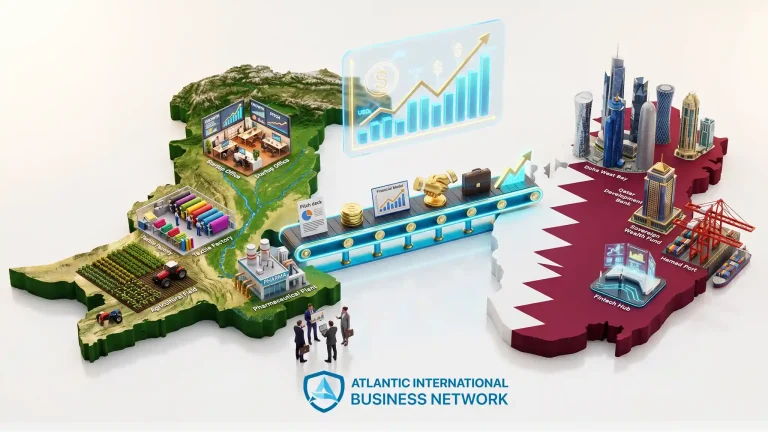



The GCC region sits on a $2+ trillion economy. And honestly? Most Pakistani entrepreneurs haven’t even scratched the surface of what’s possible there. Saudi Arabia is pumping billions into Vision 2030. Dubai keeps launching new free zones. Qatar, Kuwait, Bahrain, and Oman are all actively welcoming foreign businesses. The doors are wide open — you just need to know how to walk through them. Startup expansion into the Gulf isn’t just for big corporations anymore. Small and mid-sized Pakistani startups are making real moves there every year. Some are thriving. Some are struggling because they went in without a plan. This guide is for those who want to thrive. We’ll walk you from Middle East expansion basics to legal setup, cultural adaptation, partnerships, and scaling. Let’s get into it.
Understanding the GCC Market Landscape for Startup Expansion

Why GCC Markets Are Ideal for Pakistani Startup Expansion
Here’s something most people don’t realize. The GCC countries have some of the highest smartphone penetration rates in the world. Digital adoption is massive. Governments are spending heavily on tech infrastructure. And consumers? They have serious purchasing power.
For Pakistani startups, the GCC market entry opportunity is even more special. Pakistan and Gulf countries have cultural relations, language similarity, and a history of trade. Most foreign businesses do not have that kind of head start.
The main reasons why GCC markets are effective in the case of Pakistani entrepreneurs:
- Young, technologically advanced population in need of new solutions.
- Startup ecosystems supported by the government in the UAE and Saudi Arabia.
- Favourable corporate tax regimes in the majority of GCC states.
- High demand for tech, healthcare, food, and logistics services.
- The existing Pakistani diaspora can ease market entry.
The Gulf Cooperation Council collectively represents one of the fastest-growing economic regions on the planet. And the timing right now — 2026 — is genuinely ideal for entry.
Key GCC Countries for Middle East Expansion
| Country | Opportunity Highlight | Best For |
| UAE | Dubai business setup, free zones, fintech | Tech, e-commerce, consulting |
| Saudi Arabia | Vision 2030, massive consumer market | Healthcare, construction, retail |
| Qatar | Post-World Cup infrastructure boom | Hospitality, logistics, sports tech |
| Kuwait | High-income consumers, stable economy | Luxury goods, food, retail |
| Bahrain | Fintech-friendly regulations | Finance, banking tech |
| Oman | Growing tourism sector | Travel, hospitality, F&B |
The Saudi Arabia market alone has a population of 35+ million people with rapidly growing digital consumption. The UAE business opportunities are the most appealing to startups due to its ease of doing business and international connectivity.
Industry Sectors with High Expansion Strategy Potential
- Technology and Fintech – The digital payments and SaaS tools are on fire in all six countries.
- Healthcare and Wellness – The aging population and the youth who are health-conscious are creating a massive demand.
- E-commerce and Logistics – Online shopping development after the pandemic introduced permanent changes in behavior.
- Food and Hospitality – The Gulf is a strong food culture, and thus, this is always a good market.
If your startup operates in any of these spaces, explore GCC market entry options now.
Pre-Expansion Planning: Building Your Startup Expansion Strategy
Conducting Market Research and Feasibility Studies
Before you book a flight to Dubai, do your homework. Seriously. Skipping market research is the number one mistake Pakistani entrepreneurs make when entering Gulf markets.
You need to understand:
- Market size— Is there enough demand for what you offer?
- Competition — Who’s already doing what you want to do?
- Consumer behavior — How do GCC customers make purchasing decisions?
Proper feasibility studies give you real data. They save you from expensive assumptions.
Financial Planning for Middle East Expansion
Startup expansion costs an investment. There’s no getting around that. But good financial planning means you don’t burn through your capital before you start seeing returns.
Budget for these areas upfront:
- Company registration and licensing fees.
- Office space (even a virtual office initially).
- Local staff or partner costs.
- Marketing and customer acquisition.
- Contingency reserves (always plan for surprises).
Explore funding advisory services if you need help structuring your capital plan. There are real investment opportunities Gulf investors are actively looking for — especially in tech and healthcare.
Creating A Comprehensive Expansion Strategy
An expansion strategy isn’t just a document. It’s your roadmap. A good one covers your 12-month timeline, resource allocation, and risk checkpoints. Think of it like this: you wouldn’t start a road trip without knowing your route. The same logic applies here. Scalability planning from day one prevents painful pivots later.
Legal and Regulatory Framework for GCC Market Entry
Business Registration and Licensing Requirements
This is where a lot of startups get stuck. Business licensing requirements vary by country and even by emirate in the UAE. You have two main setup options:
Free Zone Setup
- 100% foreign ownership allowed
- Tax exemptions
- Faster registration process
- Restrictions on trading directly in local markets
Mainland Setup
- Access to the full local market
- May require a local sponsor in some countries
- More regulatory steps but greater flexibility
Understanding the regulatory compliance GCC rules before you register saves you from costly restructuring later.
Understanding Trade Policies & Compliance
Business registration is just step one. You also need to understand import/export rules, VAT structures, and labor laws. These vary across countries. The UAE has 5% VAT. Saudi Arabia moved to 15%. Bahrain’s rules differ again. Get proper trade policy advisory support before finalizing your setup structure. Regulatory compliance GCC isn’t optional — it’s foundational.
Intellectual Property Protection
Protect your brand before you launch. Trademark registration in GCC countries is handled separately in each jurisdiction. File early. Don’t assume your Pakistan-registered brand is automatically protected.
Strategic Partnerships & Alliance Building for Startup Expansion

Finding Local Partners & Sponsors
In some GCC countries, local sponsorship is still required for certain business structures. Even where it’s not mandatory, having the right local partner changes everything. Use strategic alliance formation services to find vetted, trustworthy partners. Don’t rush this step.
A good local partner gives you:
- Regulatory navigation support
- Existing customer relationships
- Cultural credibility
- Market access you couldn’t build alone
Negotiating Joint Ventures in GCC Markets
Joint ventures are a smart entry route for many Pakistani startups. You bring the product or service. Your GCC partner brings market knowledge, networks, and local credibility. Get professional support from AIBN for joint venture facilitation to avoid costly misunderstandings down the line.
Key things to nail in your JV agreement:
- Equity split and profit sharing
- Decision-making authority
- Exit clauses
- Intellectual property ownership
Building Distribution Networks
Your product could be excellent. But without the right distribution agreements, it won’t reach customers. Build your logistics and channel partner network early. Explore distribution partnership options that match your business model.
Cultural Adaptation & Localization for Middle East Expansion
Understanding GCC Business Culture
Cultural adaptation isn’t soft skill territory. It’s a hard business requirement in the Gulf. Business here runs on relationships. Trust comes before transactions. Patience is a virtue — deals move differently than in Karachi or Lahore. Invest in cultural competency programs for your team before deployment.
Key cultural points to respect:
- Friday is a weekend day across GCC.
- amadan significantly changes business rhythms.
- Hierarchy and seniority matter in meetings.
- Personal relationships often precede formal agreements.
Localizing Your Products & Services
Market localization does not simply mean translating your website into Arabic. It involves localizing images, color, price, and even product specifications to suit local tastes. What is successful in Pakistan does not necessarily arrive in Riyadh or Abu Dhabi.
Building A Local Team
Hire locally where possible. Workforce nationalization requirements (Saudization in KSA, Emiratization in UAE) mean you often need a percentage of local employees. Plan for this from day one.
Risk Management in GCC Market Entry
Common Challenges in Middle East Expansion
Cross-border expansion always carries risk and hidden challenges. For entering the GCC markets, the main challenges include:
- Regulatory changes happening quickly
- Cultural missteps damaging brand reputation
- Established local competitors with deep roots
- Payment delays in B2B relationships
Mitigation Strategies for Startup Expansion
International market penetration goes more smoothly when you plan for risks before they hit. Use regulatory risk mitigation frameworks to build real contingency plans. Get legal support on the ground. Keep reserve capital for unexpected compliance costs.
Monitoring & Adapting Your Strategy
Try to set clear KPIs from month one. Review them monthly. The GCC market gives you signals constantly — listen to them. Adapt fast.
Step-by-Step Action Plan for Your Startup Expansion

Phase 1: Research & Planning (Months 1–3)
- Complete market size and competition analysis
- Run a full feasibility study
- Finalize the target country and sector
- Develop your 12-month financial model
2: Legal Setup & Partnerships (Months 4–6)
- Choose a free zone vs a mainland structure
- Register your company and obtain licenses
- Identify and vet local partners
- Finalize partnership or JV agreements
Phase 3: Launch & Operations (Months 7–9)
- Execute soft launch with a limited customer base
- Deploy local team
- Start customer acquisition campaigns
- Gather market feedback actively
Phase 4: Growth & Scaling (Months 10–12)
- Optimize based on performance data
- Expand into additional GCC markets if ready
- Scale revenue through channel partners
- Reinvest in brand building
How AIBN Can Support Your GCC Market Entry Journey
The Pakistani business growth in the Gulf is complicated. You do not need to work it out by yourself. AIBN provides startups with end-to-end services when entering GCC markets. Our market entry services involve feasibility research, competitive research and strategic positioning. Discover the market entry services of AIBN to find out what suits you. Partnership facilitation introduces you to pre-vetted local partners, sponsors and potential JV partners in all six GCC countries. Ongoing advisory and training under capacity-building programs ensures that your team is up to date on regulatory changes, cultural dynamics, and market changes.
Conclusion
The GCC opportunity is real. The timing is right. But startup expansion without a plan is just expensive experimentation. The entrepreneurs who succeed in Gulf markets are the ones who research deeply, partner wisely, comply fully, and adapt quickly. Start your expansion journey today. Take the first step by mapping out your target market and running a proper feasibility study. Then build your plan around real data, not assumptions. Ready to move forward? Contact AIBN today, and let’s build your GCC entry strategy together.
FAQs
Q1: How much does it cost to set up a startup in Dubai’s free zones?
Setup costs in Dubai free zones typically vary, depending on the zone and license type. Costs vary based on office space requirements, visa allocations, and activity type. It’s best to compare multiple free zones before committing to one specific setup.
Q2: Do Pakistani entrepreneurs need a local sponsor to start a business in Saudi Arabia?
Vision 2030 has seen Saudi Arabia reform most of its ownership laws. Some industries still need a Saudi partner or agent, but most industries are now open to 100 % foreign ownership. Before you make up your structure, always check the existing regulations of your particular business activity.
Q3: What is the biggest mistake Pakistani startups make when entering GCC markets?
The greatest error is not to conduct proper market research and go directly to registration. Startups waste investment without knowing the local consumer behavior, competition, and regulatory requirements. Before committing, it is worthwhile to invest in a comprehensive feasibility study that will save a lot of time and investment.
Q4: How long does the company registration process take in the UAE?
In UAE free zones, registration can take as little as 3 to 7 working days for straightforward cases. Mainland registration typically takes 2 to 4 weeks. The timeframes are different based on the completeness of the documents, the type of license, and the emirate in which you are establishing.